
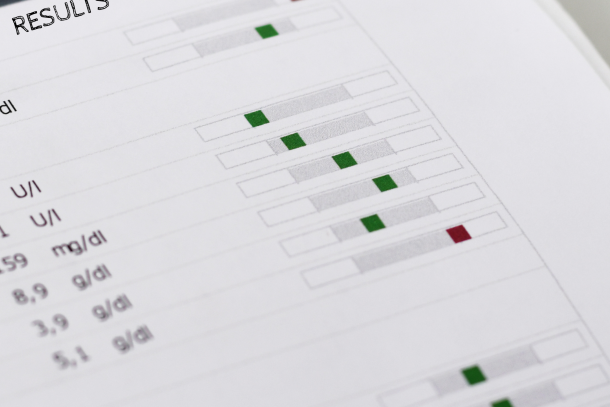
Can you relate?
You go to your doctor because overall you are functioning, but something feels off. Maybe you are more fatigued than usual. Maybe you notice signs of inflammation like joint discomfort or headaches. Maybe your weight feels stubborn despite doing the “right” things.
Your doctor runs a standard blood panel.
Everything comes back normal.
You are told you are fine.
And yet, you do not feel fine.
You might feel relief that nothing serious is happening. Gratitude, even. But also confusion. Why do I feel this way then? Is this just aging? Am I overreacting?
You may leave feeling dismissed. Or frustrated. Or quietly unheard.
This experience is more common than you think.
What “Normal” Really Means
Conventional medicine uses laboratory ranges to identify possible disease. These reference ranges are statistical. Most are defined as the central 95 percent of values from a reference population. That means 2.5 percent fall below, 2.5 percent fall above, and the middle 95 percent becomes “normal” (CLSI, 2010).
These ranges are extremely useful for diagnosing and treating disease.
But they are not necessarily designed to define optimal nutrient status or metabolic function. Their purpose is to detect significant pathology, not subtle dysfunction.
So when your labs are normal, it means nothing is currently flagging as disease.
It does not automatically mean your body is functioning at its best.
Common Symptoms That Often Fall Through the Cracks
Certain symptoms are often dismissed because they are subtle, fluctuate, and do not always show up clearly on standard labs.
Fatigue
Mood fluctuations
Headaches
Indigestion
Bloating
Skin changes
Individually, each may seem minor. Together, they can quietly erode your energy, clarity, and confidence.
These symptoms exist in the space between disease and vitality. They may not meet criteria for a diagnosis. They may not push lab markers outside reference ranges. But that does not make them insignificant.
They are not laziness.
They are not lack of discipline.
They are not a failure to manage stress well enough.
They are physiological signals.
Fatigue can reflect inflammatory load or nutrient inefficiencies.
Brain fog may relate to blood sugar variability or immune activation.
Bloating can signal digestive stress or food sensitivities.
Mood shifts can be influenced by blood sugar instability, inefficient hormone clearance, or nutrient deficiencies that affect neurotransmitter balance.
Your body communicates through patterns long before pathology appears. The absence of disease does not automatically equal the presence of vitality.
Sometimes the better question is not “What’s wrong with me?” but “What might my physiology be responding to?”
4 Hidden Reasons You Can Feel Unwell with Normal Labs
It is entirely possible for lab work to fall within reference ranges and still feel unwell. That does not make labs useless. It simply means they are answering a specific question: Is there overt disease present?
They are not always designed to detect early imbalance.
Here are four common patterns that can explain persistent symptoms.
1. Inflammation That Is Not High Enough to Flag
Inflammation exists on a spectrum. Severe inflammation often pushes markers clearly out of range. Chronic low grade inflammation can simmer quietly for years without crossing diagnostic thresholds.
It may be influenced by repeated food triggers, chronic stress, poor sleep, environmental exposures, blood sugar instability, detoxification burden, or nutrient deficiencies.
None of these alone may seem dramatic. Together, they create cumulative load.
Think of carrying one light grocery bag versus five. The body responds to total burden.
Low grade inflammation can manifest as fatigue, joint stiffness, brain fog, skin changes, or mood variability long before labs become alarming.
2. Food Sensitivities
Food sensitivities are different from food allergies. Allergies are immediate and often obvious. Sensitivities are typically delayed immune responses that may appear hours or days later.
Because of this delay, patterns are easy to miss.
Instead of acute reactions, sensitivities may present as fatigue, bloating, headaches, joint discomfort, skin flares, or mood shifts.
These reactions do not always alter standard blood panels, yet they can significantly affect how you feel day to day.
3. Genetic Variations
Genetic variations, often called SNPs (short for single nucleotide polymorphisms,) influence how efficiently your body processes nutrients and regulates key pathways.
They are not defects. They are more like traffic patterns.
Some pathways flow smoothly. Others move more slowly and require additional support.
Variations in methylation can influence how you process folate and B12. Variations in the DAO gene can affect histamine breakdown. Detox pathways may differ in efficiency.
Standard labs measure end stage markers. They do not measure pathway efficiency. Genetic insights can help explain why two people with similar labs feel very different.
4. Optimal Versus In Range
When you look at your lab report, you see a reference range. If your result falls inside that range, it is labeled normal.
That is helpful. It tells us there is no obvious disease.
But normal and optimal are not always the same.
In functional blood chemistry analysis, markers are often viewed in patterns rather than isolation. A ferritin level may be technically in range yet still low for steady energy. B12 patterns may make more sense when interpreted alongside red blood cell indices. Thyroid function is clearer when TSH, T3, T4, and metabolic markers are viewed together.
In range means not pathological.
It does not automatically mean ideal for your physiology, stress load, or metabolic demands.
The goal is not to chase perfect numbers. It is to look at trends and patterns. When markers are interpreted in context, symptoms often begin to make sense.
And when they make sense, they become workable.
When You’re Functioning Well But Not Feeling Well
If you tend to push through discomfort quietly, this may feel familiar.
You are used to managing responsibility. When something feels off physically, your instinct is to adjust and push through.
You clean up your diet. Improve your sleep. Optimize your schedule.
And when labs come back normal, you assume the issue must be you.
Maybe you just need more discipline. Maybe you are simply stressed.
High capacity individuals often internalize symptoms as personal shortcomings.
But physiology does not respond to willpower.
You can be productive and still have low grade inflammation. Organized and still have subtle nutrient inefficiencies. Successful and still have a thyroid pattern that needs support.
Because you are data oriented, you do not want vague reassurance. You want clarity.
You want to understand what is happening in your body the same way you would analyze a complex project. By looking at patterns, not surface numbers.
When lab markers are interpreted in context, symptoms often stop feeling like personal failure and start becoming useful information.
What to Do Instead of Guessing
If standard labs have not explained your symptoms, the answer is not to ignore them. It is also not to spiral into self diagnosis.
It is to widen the lens.
A functional approach builds on conventional medicine. Instead of asking only whether disease is present, it also asks how well each system is functioning.
Rather than focusing on one isolated value, we examine patterns across markers.
How do ferritin, red blood cell indices, and inflammatory markers interact?
How do thyroid hormones relate to cholesterol trends?
What story do blood sugar and triglycerides tell together?
Sometimes clarity comes from deeper interpretation of labs you have already run. Sometimes it involves additional tools such as food sensitivity testing or genetic insights.
The goal is not alarm.
It is understanding.
When symptoms are viewed alongside patterns in your data, decisions become more strategic and less reactive.
Clarity is rarely dramatic.
But it is deeply stabilizing.
A Gentle Next Step
If this resonates…
If you’ve been told everything is fine, but you don’t feel fine…
If you have a sense there’s more beneath the surface…
There is a thoughtful way to explore that.
The Wellness Data Consultation is designed for exactly this space. It’s not about committing to a long program or chasing endless testing. We begin with functional testing based on your goals, which may include blood chemistry analysis, food sensitivity testing, or genetic insights.
Then we spend 60 to 75 minutes reviewing your results together.
Not just reviewing numbers. Interpreting patterns.
You leave with a clearer understanding of what your data suggests and what your next steps could be.
No pressure.
No urgency.
Just information you can use.
Symptoms are rarely random.
They are signals.
Fatigue. Brain fog. Mood shifts. Digestive discomfort. These are not personality traits or failures of discipline. They are patterns waiting to be understood.
When we pause long enough to listen and look at the data in context, those patterns often become clearer.
And clarity changes the conversation.
Instead of asking what is wrong with me, you begin asking what is my body responding to.
You deserve answers that feel specific to you.
If you would like to explore whether this is a good fit, you can book a Wellness Blueprint Call and simply write “data” in the booking notes so I know what you would like to focus on.
References
Fraser, C. G. (2001). Biological variation: From principles to practice. AACC Press.
McPherson, R. A., & Pincus, M. R. (Eds.). (2021). Henry’s clinical diagnosis and management by laboratory methods(24th ed.). Elsevier.
Solberg HE. (1987). Approved recommendation on the theory of reference values. Part 1. The concept of reference values. Clinica Chimica Acta.