
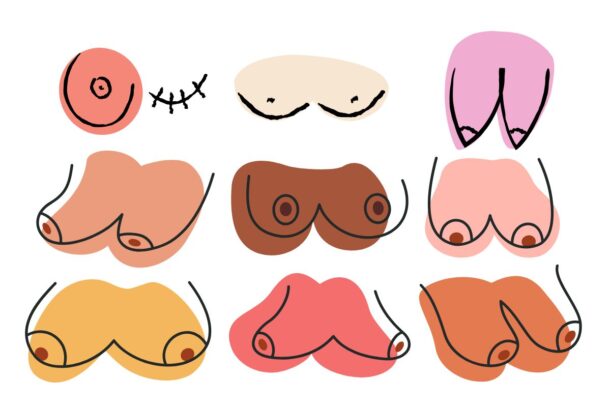
October is Breast Cancer Awareness Month. We hear a lot about mammograms, family history, and BRCA genes. It is also an opportunity to better understand an often-oversimplified hormone: estrogen.
Before I began studying hormones, I thought estrogen was one hormone with one main job. I associated it with periods, pregnancy, and menopause.
In reality, estrogen is a family of hormones supporting your brain, bones, heart, muscles, skin, sexual health, and reproductive system. You need it. What matters is how much your body makes, how your tissues respond, and how it processes what it no longer needs.
This matters for breast health because about three out of four breast cancers are hormone receptor-positive, meaning the cancer cells have receptors for estrogen, progesterone, or both. Think of these receptors as specialized communication ports inside the cell. When estrogen or progesterone connects with its matching port, it delivers a message that can influence how the cell behaves and, in hormone receptor-positive cancers, encourage growth.
That statistic does not mean estrogen alone causes breast cancer. Risk is influenced by age, family history, inherited gene changes, reproductive history, lifestyle, and environmental exposures. Hormones are one part of a larger picture.
THE BIOLOGY
There Is More Than One Type of Estrogen
The three main forms of estrogen are:
- Estrone (E1): This becomes the primary form after menopause. Overall estrogen levels decline after menopause, but estrone is the form the body continues to make in larger proportions. It can be produced in body fat and other tissues.
- Estradiol (E2): This is the strongest and most active estrogen during the reproductive years. It is made mainly by the ovaries before menopause and helps regulate ovulation, menstrual cycles, bone density, brain function, and vaginal health.
- Estriol (E3): This is a weaker form that rises significantly during pregnancy. It helps support the uterus, placenta, and changes needed for birth and breastfeeding.
Estradiol is also used in hormone replacement therapy. Its benefits and risks depend on the type, timing, length of use, health history, and whether a form of progesterone is included. These decisions should be personalized with a licensed healthcare provider.
Estrogen Does More Than Regulate Your Cycle
Estrogen receptors are found throughout the body, so changing levels can influence many areas at once. Estrogen helps support:
- Menstrual cycles, ovulation, and fertility
- Bone strength
- Memory, focus, and mood
- Vaginal comfort and lubrication
- Cholesterol and blood-vessel health
- Skin collagen and moisture
- Muscle mass and strength
- Blood-sugar regulation
One surprising example is the shoulder. Connective tissues contain estrogen receptors, and emerging research suggests that estradiol may help regulate inflammation, collagen, and the buildup of scar-like tissue. This may help explain why frozen shoulder becomes more common during the perimenopausal and menopausal years, although researchers are still working to understand the connection.
The goal is an amount of estrogen that makes sense for your body and life stage.
How the Body Makes Estrogen
Your body can make estrogen from hormones called androgens. Testosterone is one of the androgens most people recognize.
An enzyme called aromatase acts like a conversion tool. It changes testosterone into estradiol and another androgen, androstenedione, into estrone.
The ovaries make much of the body’s estrogen during the reproductive years. Aromatase is also active in body fat, skin, bones, the brain, and breast tissue. After menopause, when the ovaries make far less estrogen, production in these other tissues becomes more important.
Because aromatase uses testosterone to make estradiol, more aromatase activity may sometimes mean that more testosterone is being converted into estrogen. Testosterone helps support sexual desire in both sexes, so having less available may be one factor contributing to low libido. However, high estrogen does not always mean too much testosterone is being converted, and libido is influenced by much more than hormones. Stress, sleep, medications, pain, thyroid health, mood, relationships, and life stage can all play a role.
What Does “Estrogen Dominance” Mean?
The phrase estrogen dominance is commonly used in wellness conversations, but it is not one clearly defined medical diagnosis.
Sometimes people use it to mean estrogen is consistently high. Other times, they mean estrogen is high compared with progesterone. It may also be used to describe symptoms such as breast tenderness, heavy periods, bloating, headaches, or mood changes.
These symptoms can have many causes. Estrogen and progesterone naturally rise and fall throughout the cycle and can fluctuate significantly during perimenopause.
Still, the term can lead us to a useful question: What influences how estrogen is made, used, processed, and eliminated? To answer that, we need to look at what happens after estrogen has delivered its message.
Estrogen Has to Leave the Body, Too
As I explained in Your Body Is Already Detoxing, detoxification is something your body already does every day.
Think of estrogen metabolism like city traffic. The liver acts as a traffic director, moving estrogen through different routes as it prepares it for removal.
As the liver processes estrogen, it converts it into compounds called estrogen metabolites. Three commonly discussed metabolites are 2-hydroxy (2-OH), 4-hydroxy (4-OH), and 16-hydroxy (16-OH) estrogens. They are sometimes called “good” or “bad” online, but the reality is more complicated. A single urine test cannot diagnose or predict breast-cancer risk. It can, however, offer a snapshot of which estrogen metabolites are showing up in higher amounts and how your body appears to be processing estrogen at the time of testing.
One way the liver prepares estrogen for removal is by attaching a chemical tag called glucuronic acid. This makes it easier to transport through bile and into the intestines, where it can ultimately leave in the stool.
But the intestines are not simply an exit route. Some gut bacteria produce an enzyme called beta-glucuronidase, which can remove that tag. Once the tag is removed, estrogen may become active again and available for reabsorption through the intestinal wall instead of being eliminated.
Researchers use the term estrobolome to describe a group of gut microbes whose genes carry the instructions for making enzymes involved in processing estrogen. When the balance of the gut microbiome shifts, the resulting changes in microbial activity may influence how much estrogen is reactivated and recycled.
Transit time may matter as well. When digestion moves slowly or constipation is frequent, estrogen metabolites remain in the intestines longer, potentially creating more opportunity for them to be unpacked and reabsorbed. Supporting the gut with fiber-rich foods, adequate fluids, regular movement, and personalized digestive support remains a sensible wellness foundation.
CONTRIBUTING FACTORS
5 Factors That Influence How Your Body Handles Estrogen
Estrogen is influenced by more than what your ovaries produce. Five key factors can affect how much your body makes, how your tissues respond, and how it is processed and eliminated:
- Life Stage
Estrogen changes during puberty, pregnancy, perimenopause, and menopause, affecting symptoms and how it is produced and processed. - Blood Sugar & Insulin
Estrogen also communicates with the pancreas, the organ that releases insulin. Insulin helps move glucose, or sugar, out of the bloodstream and into cells where it can be used for energy.
The cells in the pancreas that make insulin have estrogen receptors. Estradiol can help these cells respond appropriately when blood sugar rises and also supports the body’s sensitivity to insulin. As estrogen declines after menopause, these effects may change, which is one reason blood-sugar regulation can become more challenging for some women.
The effects can extend beyond blood sugar. As estradiol declines, insulin sensitivity may decrease, muscle mass can become harder to maintain, and body fat tends to shift toward the abdomen. These changes can contribute to the differences in body composition many women notice during and after the menopause transition, although aging, activity, sleep, nutrition, and other factors also play important roles.
When insulin resistance and increased body fat are also present, the relationship becomes more complicated. The pancreas may release more insulin to manage blood sugar, while fat tissue can produce estrogen through an enzyme called aromatase. This does not mean excess estrogen always causes excess insulin. Rather, blood sugar, insulin, body composition, and estrogen can influence one another.
If you’d like to explore this connection further, including how walking after meals and building muscle can support blood-sugar regulation, read The Hidden Link Between Blood Sugar and Hormonal Imbalance. - Alcohol
Alcohol is one of the clearest lifestyle-related breast-cancer risk factors. Because the liver helps process both alcohol and hormones, alcohol can alter the way estrogen is metabolized and cleared, which may contribute to higher circulating estrogen in some people. Alcohol also produces acetaldehyde, a reactive byproduct that can damage DNA. Risk generally increases as intake rises. This information is meant to support an informed choice, not create guilt or suggest that you can never enjoy alcohol. If alcohol is something you choose from time to time, the goal is simply to be intentional about how often and how much you drink while understanding the tradeoffs. - Stress & Recovery
Stress does not directly cause breast cancer, but ongoing stress without enough recovery can affect sleep, blood sugar, appetite, movement, alcohol use, and our ability to maintain supportive habits. Sleep is one of the body’s most important opportunities for recovery.
To learn more about building your capacity to recover from everyday demands, read Why Stress Isn’t the Problem — It’s Your Capacity to Recover That Matters.
If restorative sleep is an area you’d like to support, read Why You Wake Up Tired: Sleep Is Only Part of the Story for practical ways to support your circadian rhythm and create more restful nights. - Environmental Chemicals
Some chemicals can interfere with how hormones are made, transported, or used in the body. These are known as endocrine-disrupting chemicals and include certain pesticides, PCBs, phthalates, bisphenols, and PFAS. PFAS are also highly persistent and are the group most commonly referred to as “forever chemicals.”
Other chemicals can also remain in the environment for long periods of time. DDT, DDE, PCBs, dieldrin, and chlordane, for example, are considered persistent pollutants.
Exposure to some of these chemicals may be associated with increased breast cancer risk. Genetics and family history also influence breast cancer risk, which is why it can be helpful to think about environmental exposures as one part of a much larger picture.
The goal is not to create a “toxin-free” life, but to understand common sources of exposure and reduce what is reasonably avoidable.
GENETICS
Most people have heard of BRCA, but there are actually two primary genes: BRCA1 and BRCA2. These genes normally help cells repair damaged DNA. Inheriting a harmful change in either gene can significantly increase the risk of breast and ovarian cancer.
Other genes help the body make and process estrogen:
CYP19A1 • Cytochrome P450 19A1
CYP19A1 provides instructions for making aromatase, an enzyme that converts certain androgens into estrogen. For example, it converts testosterone into estradiol. Some CYP19A1 variants may influence how much aromatase the body makes or how active the enzyme is. However, a genetic result alone cannot tell us how much estrogen someone is producing or predict breast-cancer risk.
CYP1B1 • Cytochrome P450 1B1
CYP1B1 helps convert estrogen into metabolites, particularly 4-hydroxy (4-OH) estrogen, as an early step in processing it for elimination. Producing 4-OH is normal. The concern arises when it is not processed efficiently and forms unstable compounds that may damage DNA, which is why researchers study this pathway in connection with breast cancer. Downstream enzymes, including COMT and glutathione-related enzymes, help make these compounds less reactive and prepare them for removal. A higher 4-OH result alone does not indicate or predict cancer.
COMT • Catechol-O-Methyltransferase
COMT takes over after CYP1B1 produces 4-hydroxy (4-OH) estrogen. It adds a small chemical tag that makes 4-OH less reactive and helps move it toward elimination. When COMT activity is slower, this step may be less efficient, allowing certain estrogen metabolites to accumulate. However, a “slow COMT” result alone does not confirm estrogen dominance or predict breast-cancer risk.
GSTM1 • Glutathione S-Transferase Mu 1
GSTM1 helps with a later cleanup step. As the body processes estrogen, some metabolites can become reactive. GSTM1 uses glutathione, an important antioxidant, to help neutralize these compounds and prepare them for removal.
KEY NUTRIENTS & FOODS
Fiber
Fiber supports regular bowel movements, helping carry processed estrogen out of the body in stool. It also feeds beneficial gut microbes.
Found in: Beans, lentils, berries, vegetables, oats, barley, chia, flax, nuts, seeds, and whole grain
If you would like ideas for incorporating enough fiber into your day, check out my free Nourish Your Gut Guide.
B Vitamins
Folate and vitamin B6 support methylation, a process that adds a small chemical tag to estrogen metabolites so the body can continue processing them for removal. These vitamins work alongside other nutrients and enzymes, so neither acts as an estrogen “detox” on its own.
Found in: Leafy greens, beans, lentils, asparagus, avocado, citrus, poultry, salmon, chickpeas, potatoes, and bananas.
Magnesium
Magnesium acts as a helper for hundreds of enzymes throughout the body. It supports energy production, blood-sugar regulation, muscle and nerve function, and hormone metabolism. COMT also needs magnesium to help process certain estrogen metabolites. Magnesium cannot correct an estrogen imbalance on its own, but getting enough helps these pathways function normally.
Found in: Pumpkin seeds, almonds, beans, leafy greens, cacao, avocado, and whole grains.
Cruciferous & Allium Vegetables
Cruciferous and allium vegetables provide natural plant compounds that support the liver enzymes involved in processing estrogen. They also support the body’s antioxidant defenses, which help protect cells as hormones and other compounds are broken down. These foods do not “detox” estrogen on their own, but they help provide the nutrients the body needs to keep its natural processing systems working.
Found in: Broccoli, cabbage, cauliflower, Brussels sprouts, kale, garlic, onions, leeks, and shallots.
PLANT SUPPORT
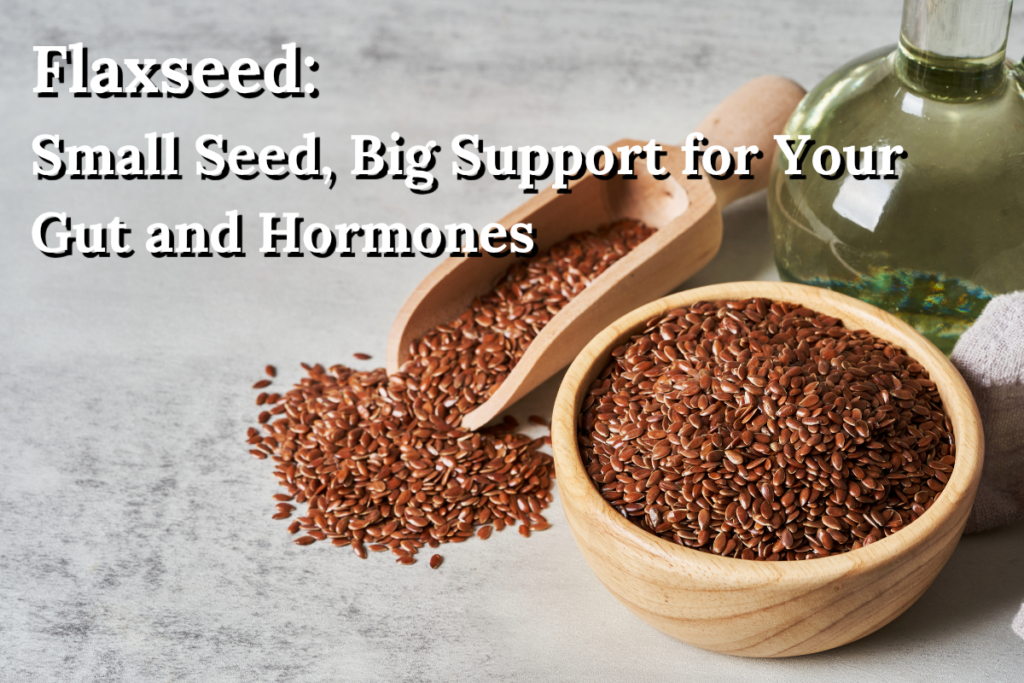
Flaxseed is rich in lignans, plant compounds that gut bacteria convert into substances such as enterolactone. Laboratory research suggests that enterolactone may weakly slow aromatase, the enzyme that helps make estrogen. However, eating flaxseed has not been shown to work like prescription aromatase inhibitors or prevent breast cancer. It may still be a supportive food because its lignans can influence how the body responds to and processes estrogen.
Try adding ground flaxseed to oatmeal, yogurt, smoothies, or salads. Grinding makes its lignans easier for the body to access. For these benefits, choose whole flaxseeds and grind them shortly before use. Once flaxseed is ground, its healthy fats are more exposed to air and more vulnerable to oxidation. Flaxseed oil is also more prone to oxidation and does not provide the fiber, lignans, and other components found in the whole seed.
WHERE TO START
5 Practical Steps to Support Estrogen Metabolism & Breast Health
You do not need a complicated hormone protocol or a complete lifestyle overhaul. These steps cannot guarantee balanced hormones or prevent breast cancer, but they can support the systems involved in hormone processing and your health more broadly. Choose one or two steps to focus on before adding more.
1. Keep Screening Current
Breast-cancer screening is not one-size-fits-all, and this blog is not recommending one specific test. Practice breast self-awareness by becoming familiar with how your breasts normally look and feel. Bring any new or persistent changes to the attention of a licensed primary-care provider, and discuss which screening options fit your age, breast density, personal and family history, risk factors, and preferences.
What this looks like in real life: Pay attention to changes you notice while showering, dressing, or going about your day. Breast awareness does not have to feel clinical; you can make it playful with your partner, too. If you or your partner notices a new lump or another unusual change, check in with your licensed primary-care provider rather than waiting to see whether it goes away. You can also use routine visits to ask which screening approach is appropriate for you.
2. Build Movement Into Your Day
Regular movement helps support blood-sugar regulation, insulin sensitivity, body composition, digestion, and bowel regularity. You do not have to rely on long or intense workouts. Short periods of movement throughout the day count, too.
What this looks like in real life: Take a ten-minute walk after lunch or dinner, or add a few movement breaks during the workday. You can also add short “strength snacks” throughout your week. Try wall push-ups if floor push-ups are uncomfortable, do a few squats while waiting for your coffee to brew or food to heat up, add calf raises while brushing your teeth or doing dishes, or keep a resistance band at your work desk or by the couch and do a few seated or standing band rows between meetings or while watching TV.
3. Add Fiber Gradually
Fiber feeds beneficial gut microbes and helps keep digestion moving. Regular bowel movements give processed estrogen a path out of the body rather than allowing it to remain in the intestines longer. Increase fiber gradually and pair it with adequate fluids so your digestive system has time to adjust. Adding too much too quickly, especially without enough fluid, can contribute to gas, bloating, or constipation.
What this looks like in real life: Add berries and ground flaxseed to oatmeal or yogurt, toss lentils into soup, or add another vegetable to dinner. Begin with one change instead of trying to reach your fiber goal overnight. For more ideas on incorporating fiber-rich foods throughout your day, check out my Nourish Your Gut Guide.
4. Decide Before You Pour
Rather than letting alcohol become the default, decide ahead of time when a drink is truly worth it to you and how much you want to have. The goal is intentionality, not perfection.
What this looks like in real life: Choose alcohol-free weekdays, limit drinking to special events, alternate alcoholic drinks with water, or try a nonalcoholic option when socializing.
5. Reduce Exposure Without Chasing Perfection
It is impossible to avoid every environmental toxin. Instead, focus on simple changes that reduce common exposures without making your life feel overwhelming.
What this looks like in real life: Start with one habit, such as avoiding heating food in plastic, washing produce, ventilating your kitchen while cooking, or choosing a fragrance-free household or personal-care product when you replace one you already use.
I also collaborate with others who share practical resources for choosing less-toxic household and personal-care products. Follow me on Instagram or subscribe to Digestible Insights through the pop-up on my homepage to see future resources and collaborations.
LOOKING FOR PERSONALIZED SUPPORT
How the G.E.N.E.S. Framework Helps You Understand Estrogen
If there is one thing I hope you have taken away from this article, it is that estrogen does not work in isolation. Blood sugar, digestion, bowel regularity, stress recovery, environmental exposures, genetics, and daily habits can all influence how your body makes, uses, processes, and eliminates estrogen.
That is why estrogen is something we look at through the bigger picture in my Thrive in Your G.E.N.E.S. Framework:
G – Ground the Body: Build supportive foundations around balanced meals, blood sugar, hydration, movement, digestion, and regular bowel movements that support estrogen processing and elimination.
E – Explore Your Genetic Blueprint: Understand how genetic differences may influence aromatase activity, estrogen-metabolite pathways, methylation, and antioxidant protection while remembering that genes offer clues, not predictions.
N – Navigate Food Sensitivities: Explore whether certain foods may be adding to digestive or immune stress, then build a varied, nutrient-rich way of eating that your body tolerates and that provides the fiber and nutrients your gut and liver need.
E – Enhance Resilience: Support sleep, nervous-system regulation, stress recovery, and gut resilience, which can influence blood sugar, digestion, and your ability to maintain hormone-supportive habits.
S – Simplify & Sustain: Turn what you learn into realistic choices around food, movement, alcohol, and environmental exposure without chasing perfect hormones or a toxin-free life.
FINAL THOUGHTS
Although we cannot fully control our future health outcomes, we can make informed choices that support our well-being and help us live a meaningful, satisfying life.
Breast cancer, or any cancer, can be a frightening and deeply emotional topic. This may be especially true if you have experienced cancer yourself, supported someone you love through diagnosis and treatment, or lost a loved one to the disease. Learning about estrogen and breast-cancer risk may bring up fear, grief, or uncertainty, and those feelings are understandable.
Learning about hormones, genes, environmental exposures, and lifestyle can help us better understand what may influence our health and where we have opportunities to offer our bodies more support. Cancer is complex, and no single food, exposure, genetic variant, or habit tells the whole story. Still, we can take meaningful steps to reduce risk and support our overall well-being. If cancer becomes part of our story, we can use the tools and support available to help our bodies through diagnosis, treatment, and recovery.
My hope is that this article leaves you feeling informed rather than afraid. Focus on what is within your reach: ask questions, seek appropriate medical care when needed, and choose a few sustainable habits that support your energy, digestion, hormone processing, and quality of life.
Medical Disclaimer
The information provided in this article is for educational purposes only and is not intended to diagnose, treat, cure, or prevent any disease. It is not a substitute for individualized medical advice, diagnosis, or treatment. Always consult your licensed healthcare provider before making changes to your diet, supplements, medications, or healthcare plan.
REFERENCES
American Cancer Society. (2026). Breast cancer hormone receptor status. https://www.cancer.org/cancer/types/breast-cancer/understanding-a-breast-cancer-diagnosis/breast-cancer-hormone-receptor-status.html
Centers for Disease Control and Prevention. (2026). Breast cancer risk factors. https://www.cdc.gov/breast-cancer/risk-factors/index.html
Cleveland Clinic. (2026). Estrogen: Hormone, function, levels & imbalances. https://my.clevelandclinic.org/health/body/22353-estrogen
De Paoli, M., Zakharia, A., & Werstuck, G. H. (2021). The role of estrogen in insulin resistance: A review of clinical and preclinical data. The American Journal of Pathology, 191(9), 1490–1498. https://doi.org/10.1016/j.ajpath.2021.05.011
Ervin, S. M., Li, H., Lim, L., Roberts, L. R., Liang, X., Mani, S., & Redinbo, M. R. (2019). Gut microbial beta-glucuronidases reactivate estrogens as components of the estrobolome that reactivate estrogens. Journal of Biological Chemistry, 294(49), 18586–18599. https://doi.org/10.1074/jbc.RA119.010950
Flores, R., Shi, J., Fuhrman, B., Xu, X., Veenstra, T. D., Gail, M. H., Gajer, P., Ravel, J., & Goedert, J. J. (2012). Fecal microbial determinants of fecal and systemic estrogens and estrogen metabolites: A cross-sectional study. Journal of Translational Medicine, 10, 253. https://doi.org/10.1186/1479-5876-10-253
Liu, H., Sun, Y., Ran, L., Li, J., Shi, Y., Mu, C., & Hao, C. (2023). Endocrine-disrupting chemicals and breast cancer: A meta-analysis. Frontiers in Oncology, 13, 1282651. https://doi.org/10.3389/fonc.2023.1282651
Nadal, A., Alonso-Magdalena, P., Soriano, S., Ropero, A. B., & Quesada, I. (2009). The role of oestrogens in the adaptation of islets to insulin resistance. The Journal of Physiology, 587(21), 5031–5037. https://doi.org/10.1113/jphysiol.2009.177188
National Center for Biotechnology Information. (2026). COMT catechol-O-methyltransferase. https://www.ncbi.nlm.nih.gov/gene/1312
National Center for Biotechnology Information. (2026). CYP19A1 cytochrome P450 family 19 subfamily A member 1. https://www.ncbi.nlm.nih.gov/gene/1588
National Center for Biotechnology Information. (2026). CYP1B1 cytochrome P450 family 1 subfamily B member 1. https://www.ncbi.nlm.nih.gov/gene/1545
National Center for Biotechnology Information. (2026). GSTM1 glutathione S-transferase mu 1. https://www.ncbi.nlm.nih.gov/gene/2944
Playdon, M. C., Coburn, S. B., Moore, S. C., Brinton, L. A., Wentzensen, N., Anderson, G., Wallace, R., Falk, R. T., Pfeiffer, R., Xu, X., & Trabert, B. (2018). Alcohol and oestrogen metabolites in postmenopausal women in the Women’s Health Initiative Observational Study. British Journal of Cancer, 118(3), 448–457. https://doi.org/10.1038/bjc.2017.419
Samavat, H., & Kurzer, M. S. (2015). Estrogen metabolism and breast cancer. Cancer Letters, 356(2 Pt A), 231–243. https://doi.org/10.1016/j.canlet.2014.04.018
Wang, Z., Li, X., Liu, X., Yang, Y., Yan, Y., Cui, D., Meng, C., Ali, M. I., Zhang, J., Yao, Z., Long, Y., & Yang, R. (2025). Mechanistic insights into the anti-fibrotic effects of estrogen via the PI3K-Akt pathway in frozen shoulder. The Journal of Steroid Biochemistry and Molecular Biology, 249, 106701. https://doi.org/10.1016/j.jsbmb.2025.106701