
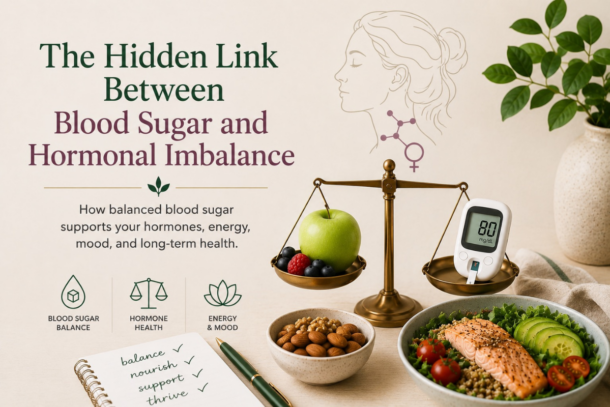
Maybe you’ve noticed that your energy crashes in the afternoon. You feel irritable if meals are delayed. You wake up at 3 a.m. for no obvious reason. The weight that used to come off with a few simple changes now seems determined to stay. Your mood feels less predictable. Your periods may be changing. You might assume these symptoms are purely hormonal. And hormones are certainly part of the picture.
But what many don’t realize is that blood sugar regulation and hormone balance are deeply connected. In fact, for some, blood sugar fluctuations may be one of the most overlooked influences on symptoms often blamed entirely on hormones.
If you’re over 40 and feeling like your body is playing by a new set of rules, understanding this connection can provide an important missing piece of the puzzle.
THE BIOLOGY
When most people hear the words “blood sugar,” they may immediately think about diabetes. But blood sugar regulation affects everyone, and it plays a much bigger role in how we feel than many people realize. In fact, it influences nearly every system in the body, including the hormones that regulate energy, mood, metabolism, and reproductive health.
Every time you eat, your digestive system breaks carbohydrates down into glucose, your body’s primary source of fuel. As glucose enters the bloodstream, your pancreas releases insulin. Think of insulin as an Amazon delivery driver and glucose as the package. Insulin’s job is to deliver glucose from your bloodstream to your cells, where it can be used to produce energy.
When deliveries happen smoothly, your blood sugar stays within a relatively steady range. But when blood sugar rises quickly after a meal and then drops too low, your body has to work harder to restore balance.
One of the body’s primary tools for restoring that balance is cortisol.
When blood glucose begins to fall, your brain recognizes that your cells still need fuel. In response, it sends a signal to release cortisol, which helps raise blood sugar by triggering the liver to release stored glucose into the bloodstream. This is a normal, protective response that helps ensure your brain and body continue to receive the energy they need.
Occasional fluctuations are a normal part of life. The challenge arises when blood sugar repeatedly spikes and crashes throughout the day due to factors such as chronic stress, poor sleep, skipping meals, or meals high in refined carbohydrates and low in protein and fiber. Over time, these repeated fluctuations can keep cortisol elevated more often than intended.
Persistently elevated cortisol doesn’t just affect stress levels. It can also influence the delicate balance of progesterone, estrogen, thyroid hormones, and other pathways involved in metabolism and reproductive health.
This connection often becomes even more important during perimenopause. As estrogen and progesterone naturally begin to fluctuate, many women become more sensitive to the effects of blood sugar swings. Energy crashes, mood changes, disrupted sleep, and increased abdominal weight gain often become more noticeable. This isn’t simply because hormones are changing. It’s because your body functions as an interconnected system, with changes in one area often influencing changes in other areas.
Changes in body composition can also become part of this picture. Fat tissue is hormonally active and can produce a weaker form of estrogen called estrone. As ovarian estrogen production declines during perimenopause, storing additional fat may represent one of the body’s adaptive responses to changing hormone levels. However, excess body fat can also contribute to insulin resistance, making it more difficult for cells to respond effectively to insulin. As a result, the body often needs to produce more insulin to keep blood sugar within a healthy range, making it increasingly difficult to maintain healthy blood sugar regulation.
Rather than thinking about hormones in isolation, it’s often more helpful to view blood sugar, stress, metabolism, thyroid function, and reproductive hormones as one interconnected system.
CONTRIBUTING FACTORS
5 Factors That Can Influence Blood Sugar and Hormone Balance
- Chronic Stress
Stress isn’t just something you feel emotionally. Your body also experiences stress from poor sleep, illness, inflammation, overtraining, under-eating, and the demands of everyday life.
When your body perceives stress, it releases cortisol to help you respond. When stress becomes chronic, cortisol can remain elevated more often than intended. Over time, this can make it more difficult to regulate blood sugar while also influencing other hormones involved in energy, metabolism, and reproductive health. - Sleep Disruption
Hormonal changes during perimenopause can make it harder to fall asleep, stay asleep, or wake feeling refreshed. At the same time, even one poor night’s sleep can reduce insulin sensitivity, making blood sugar more difficult to regulate the following day.
Our modern environment can make this even more challenging. Evening exposure to artificial light from phones, tablets, computers, and televisions can suppress melatonin, delaying your body’s natural sleep signals.
Blood sugar fluctuations can also disrupt sleep. If blood glucose drops too low overnight, your body may release cortisol to bring it back into a healthy range, potentially causing you to wake during the night.
It can be a vicious cycle: hormone fluctuations can disrupt sleep, poor sleep can make blood sugar regulation more difficult, and unstable blood sugar can make restful sleep even harder to achieve. - Chronic Inflammation
Inflammation is a normal part of your body’s healing and defense system. When you cut your finger or catch a virus, inflammation helps protect and repair your body. As uncomfortable as inflammation is the goal is to not eliminate the inflammatory response.
The problem is when the inflammatory response is chronically triggered. Ongoing inflammation can interfere with insulin signaling, making it more difficult for your cells to respond effectively to insulin. As a result, your body may need to produce more insulin to keep blood sugar within a healthy range. - Hormonal Changes During Perimenopause
As estrogen begins to fluctuate and gradually decline during perimenopause, blood sugar regulation often becomes more challenging. Estrogen helps support insulin sensitivity, so these hormonal shifts can make it more difficult for your cells to respond to insulin. Imagine your cells have become slower to answer the door. The delivery driver (insulin) keeps arriving with packages (glucose), but fewer packages are being brought inside. To compensate, your pancreas sends out more delivery drivers, trying to get the packages delivered. Over time, your body has to work harder to keep blood sugar within a healthy range. - Reduced Muscle Mass
As we age, we naturally begin to lose muscle mass unless we actively work to maintain it. Muscle is one of the body’s primary places for storing and using glucose, so having less muscle can make it more difficult to regulate blood sugar effectively.
GENETICS
Which genes may influence blood sugar and hormone balance?
Even if you carry certain genetic variants, it doesn’t mean your health outcomes are predetermined. Genetics are one piece of the puzzle, offering valuable clues about how your body may respond to stress, regulate blood sugar, metabolize nutrients, and support hormone balance. Understanding these tendencies can help personalize nutrition and lifestyle strategies that work with your body rather than against it. Here are a few worth knowing about.
PPARG • PEROXISOME PROLIFERATOR-ACTIVATED RECEPTOR GAMMA
Insulin sensitivity & glucose regulation
PPARG helps regulate how your body responds to insulin, stores fat, and uses glucose for energy. Certain PPARG variants may reduce insulin sensitivity, meaning the body has to work harder to move glucose into cells. Supporting healthy blood sugar through balanced meals, regular movement, and maintaining muscle mass may be especially beneficial for individuals with these variants.
FTO • FAT MASS & OBESITY-ASSOCIATED GENE
Appetite regulation & body composition
FTO influences appetite, feelings of fullness, and body composition. Certain variants may increase hunger or make it more difficult to feel satisfied after meals, which can indirectly affect blood sugar regulation and weight management.
COMT • CATECHOL-O-METHYLTRANSFERASE
Stress response & estrogen metabolism
COMT helps break down stress hormones like dopamine, norepinephrine, and epinephrine, while also playing a role in estrogen metabolism. Certain variants may influence how efficiently these compounds are processed, potentially affecting stress resilience and hormone balance.
APOA2 • APOLIPOPROTEIN A-II
Fat metabolism & metabolic health
APOA2 influences how the body responds to dietary fat and may affect appetite, body composition, and metabolic health. Because body composition and insulin sensitivity are closely connected, certain APOA2 variants may indirectly influence how efficiently the body regulates blood sugar.
KEY NUTRIENTS & FOODS
Magnesium
Pumpkin seeds, almonds, spinach, black beans, dark chocolate, and avocado
Protein
Eggs, Greek yogurt, chicken, fish, tofu, tempeh, cottage cheese, and legumes.
Fiber
Beans, lentils, apples, pears, oats, asparagus, broccoli, chia seeds, and flaxseeds
Omega-3 Fatty Acids
Salmon, sardines, mackerel, walnuts, chia seeds, and flaxseed
Chromium
Liver, potatoes, whole grains, beef, and eggs
HERBAL/PLANT-BASED SUPPORT

Holy basil, also known as tulsi, is a fragrant herbal tea that has been cherished in India for thousands of years. In addition to its use in Ayurveda, India’s traditional system of medicine, tulsi holds deep spiritual significance and is often regarded as a sacred plant symbolizing purity, protection, and devotion.
In herbal traditions, holy basil is considered an adaptogen, meaning it has traditionally been used to support the body’s response to stress and promote resilience. Because chronic stress can influence both blood sugar regulation and hormone balance, supporting a healthy stress response may have benefits that extend beyond simply feeling calmer. I enjoy a warm cup of holy basil tea on cold evenings. It’s a comforting way to unwind after a busy day.
Special Considerations
- Pregnancy & fertility: Because research in humans is limited, holy basil is generally not recommended during pregnancy or while trying to conceive unless advised by your healthcare provider.
- Diabetes medications: Holy basil may support healthy blood sugar levels. If you take insulin or other blood sugar-lowering medications, speak with your healthcare provider before using it, as your medication may need to be adjusted.
Note: Before adding any herbal supplement to your routine, consult with your licensed healthcare provider, especially if you are pregnant, trying to conceive, nursing, have a medical condition, or take prescription medications.
WHERE TO START
5 Practical Steps for Balancing Blood Sugar
1. Pair Your Carbohydrates
Rather than eating carbohydrates by themselves (“naked carbs”), pair them with protein, healthy fats, or fiber. This helps slow digestion and promotes a steadier rise in blood sugar.
WHAT THIS CAN LOOK LIKE IN REAL LIFE
Instead of eating a banana by itself, pair it with a handful of almonds or your favorite nut butter. Craving a cookie? Enjoy it alongside a handful of nuts rather than on its own. Or swap toast by itself for whole-grain toast topped with eggs or avocado.
2. Prioritize Protein at Breakfast
Starting your day with protein can help stabilize blood sugar, support satiety, and reduce mid-morning energy crashes and cravings.
WHAT THIS CAN LOOK LIKE IN REAL LIFE
Try eggs with sautéed vegetables, Greek yogurt with berries and walnuts, a bowl of oatmeal paired with lean breakfast sausage, or a smoothie made with protein, berries, spinach, and flaxseed. Pairing protein with carbohydrate-rich foods can help support a steadier rise in blood sugar and keep you feeling satisfied longer.
3. Take a 5–10 Minute Walk After Meals
Even a short walk after eating encourages your muscles to use glucose for energy, helping reduce post-meal blood sugar spikes. You don’t have to walk far or fast, consistency matters more than intensity.
WHAT THIS CAN LOOK LIKE IN REAL LIFE
Walk around the block after dinner, stroll through your office after lunch, or tidy up the kitchen while staying on your feet for 5–10 minutes after a meal. Small bursts of movement can add up to meaningful benefits over time.
4. Build and Maintain Muscle
Strength training helps your muscles use glucose more efficiently while supporting metabolism, especially during and after perimenopause.
WHAT THIS CAN LOOK LIKE IN REAL LIFE
Aim for two to three strength-training sessions each week. This could include resistance bands, bodyweight exercises, free weights, or working with a trainer. Every bit of muscle you build becomes another place for glucose to be used. The best routine is the one that fits your current season of life and is realistic enough to maintain consistently.
5. Support Sleep & Stress Resilience
Quality sleep and a healthy stress response work hand in hand to support balanced blood sugar and hormone health. You don’t have to eliminate stress, but creating small moments of recovery throughout the day can help your body shift out of “go mode” and into “restore mode.”
WHAT THIS CAN LOOK LIKE IN REAL LIFE
Create a simple evening routine by dimming the lights, putting away your phone 30–60 minutes before bed, and enjoying a calming activity like reading, stretching, listening to an audiobook, or sipping a warm cup of holy basil tea. Small, consistent habits can make a meaningful difference over time.
READY FOR THE NEXT STEP?
Understanding why something is happening is empowering. Knowing how to apply that knowledge to your own life is where lasting change begins.
If you’re unsure where to start or how to put these strategies into practice, you don’t have to figure it out on your own. Together, we can determine which lifestyle changes are likely to have the greatest impact based on your unique health history, symptoms, and goals.
A Wellness Blueprint Call is a great place to begin. It’s an opportunity to explore your concerns, discuss your goals, and determine which level of support is the best fit for you.
For some, a Wellness Data Consultation provides the clarity they need to better understand their blood work, genetics, or food sensitivity results. Others benefit from the personalized guidance, functional testing, and accountability offered through my Thrive in Your G.E.N.E.S. program.
FINAL THOUGHTS
Blood sugar regulation isn’t just about avoiding diabetes. It’s about supporting the countless systems that help you feel energized, think clearly, sleep well, and navigate the hormonal changes that come with midlife.
If you’re experiencing fatigue, cravings, mood changes, stubborn weight gain, or changing cycles, remember that these symptoms aren’t simply something you have to “push through.” They may be your body’s way of asking for support.
The good news is that you don’t have to change everything overnight. Small, consistent steps can add up to meaningful improvements over time. Whether it’s pairing your carbohydrates with protein, taking a short walk after meals, building muscle, prioritizing sleep, or learning more about your unique genetics, each step is an investment in your long-term health.
Your body is constantly communicating with you. The more you learn to understand those signals, the better equipped you’ll be to support your health in a way that works for you.
Medical Disclaimer
The information provided in this article is for educational purposes only and is not intended to diagnose, treat, cure, or prevent any disease. It is not a substitute for individualized medical advice, diagnosis, or treatment. Always consult your licensed healthcare provider before making changes to your diet, supplements, medications, or healthcare plan.
- LearningHerbs. (n.d.). Holy basil uses: Why tulsi is called the Queen of Herbs. https://www.learningherbs.com/blog/holy-basil-uses
- Murray, M. T., Pizzorno, J. E., & Pizzorno, L. (2005). The encyclopedia of healing foods. Atria Books.
- Zhao, Y., Chen, S., Chen, Y., Zhou, Z., Zhou, D., Li, M., & Chen, Y. (2023). The role of PPARγ gene polymorphisms, gut microbiota in the pathogenesis and treatment of type 2 diabetes. Diabetes, Metabolic Syndrome and Obesity, 16, 3603–3622. https://doi.org/10.2147/DMSO.S429825