

You’re eating your greens, avoiding junk food, maybe even taking a probiotic, and yet you still feel bloated, foggy, or tired. If that sounds familiar, the answer might not be what you’re eating. It might be what’s living inside you.
THE BIOLOGY
Your gut is home to trillions of tiny residents
Inside your digestive tract lives an entire ecosystem of microorganisms (bacteria, fungi, and other microbes) that play important roles in digestion, immunity, mood, inflammation balance, and even energy production. I like to think of them as your “tummy pets.”

The goal is not to eliminate microbes, we need them. The goal is to create a healthy, diverse, balanced environment where beneficial microbes can thrive.
Think of your gut like a rainforest. A healthy rainforest thrives on diversity, with many different species working together to create balance. Remove one key player and the whole ecosystem shifts. Your gut microbiome works in a similar way.
When wolves were removed from Yellowstone National Park in the early 1900s, the ripple effects were far-reaching. Elk populations grew, vegetation became overgrazed, and river ecosystems changed dramatically. After wolves were reintroduced in the 1990s, scientists observed gradual recovery in vegetation, biodiversity, and ecosystem balance. Your gut microbiome responds similarly. What you eat, how you sleep, and how stressed you are all shape the ecosystem within.
CONTRIBUTING FACTORS
Five things that commonly disrupt the gut microbiome
- Chronic stress and nervous system dysregulation
The gut and nervous system are constantly communicating through the gut-brain axis. When the body stays in a prolonged stress response, digestion is no longer a priority — blood flow, stomach acid, digestive enzymes, motility, and microbial balance can all be affected. This is one reason people notice bloating, changes in bowel habits, increased food sensitivities, or worsening reflux during stressful periods.
This connection is also why G in my G.E.N.E.S. framework stands for Ground Your Body. Nervous system support is not an afterthought, it is integrated throughout the entire process. Because when the body feels safer and more regulated, digestion and overall resilience are often better supported from the inside out. - Low fiber intake
Many beneficial gut microbes rely on fiber as fuel. Without enough diverse plant fibers, beneficial bacteria may struggle to produce short chain fatty acids that help support the gut lining and immune balance. Different plant fibers nourish different microbes, which is why diversity matters. - Repeated antibiotic use
Antibiotics can be necessary and life-saving. At the same time, they may reduce beneficial microbial diversity. Sometimes the microbiome rebounds well. Other times people notice lingering digestive changes or immune shifts afterward. This is not about avoiding antibiotics, it is about understanding why microbiome recovery support matters after their use. - Highly processed foods
Ultra processed foods are often low in the fibers and nutrients that beneficial microbes rely on. Many also contain additives and preservatives designed to prevent mold and spoilage. Researchers are increasingly exploring how some of these ingredients may influence the gut microbiome and microbial diversity. - Poor sleep and circadian disruption
The microbiome follows circadian rhythms just like the rest of the body. Sleep deprivation and irregular schedules may influence inflammation, blood sugar regulation, stress hormones, and microbial diversity. Sometimes improving microbiome health starts with simply protecting your sleep rhythms.
GENETICS
Which genes may affect your gut microbiome?
Your genes do not determine your destiny, but they can influence how your gut microbiome responds to food, stress, and your environment. Here are four genetic variants worth knowing about.
FUT2 · SECRETOR GENE
Microbiome diversity & Bifidobacterium levels
FUT2 influences the environment of the gut and may affect levels of Bifidobacterium, one of the most beneficial families of bacteria in the microbiome. People with certain FUT2 variants, often called “non secretors,” produce less of certain compounds that help feed these beneficial bacteria. As a result, they may have lower levels of Bifidobacterium, which can influence digestion, immune balance, and gut lining integrity. Targeted probiotic support and prebiotic-rich foods may be especially important for this group.
VDR · VITAMIN D RECEPTOR
Gut immune response & microbial balance
VDR variants affect how well your body responds to vitamin D, which plays a significant role in gut immune function and microbial balance. Even people with adequate vitamin D levels may find VDR variants influence how effectively that vitamin D is used at the cellular level, affecting gut barrier integrity and immune resilience in ways standard testing may not reveal.
IL-6 / TNF-Α · INFLAMMATORY CYTOKINE GENES
These genes influence how your immune system produces and regulates inflammatory signals. Certain variants may mean the body mounts a stronger or more prolonged inflammatory response, rippling into the gut environment and affecting microbial balance, gut lining health, and how the body responds to food sensitivities or stress.
DAO · DIAMINE OXIDASE
DAO is the enzyme responsible for breaking down histamine in the gut. Certain DAO variants reduce enzyme activity, meaning histamine from foods or produced by certain gut bacteria may accumulate rather than clear efficiently. This can show up as bloating, skin reactions, headaches, or brain fog after eating fermented foods or aged cheeses. Addressing the microbiome and histamine together often produces better results than tackling either in isolation.
Understanding which variants may be relevant for you is one of the reasons personalized genetic insights can be so valuable. General gut health advice works for many people , but for others, the missing piece is understanding their unique biology. This is why the Explore Your Genetic Blueprint phase of Thrive in Your G.E.N.E.S. and the Wellness Data Consultation both include the option to explore how genetic patterns may influence your unique wellness journey.
KEY NUTRIENTS & FOODS
Key nutrients and foods to support your microbiome
The microbiome thrives on variety, fiber, and consistency. Here are the most impactful nutritional areas to focus on.
Prebiotic Foods
Garlic, onions, leeks, asparagus, oats, flaxseeds, cooked and cooled potatoes or rice. These feed and fuel your beneficial microbes.
Fermented Foods
Yogurt, kefir, sauerkraut, kimchi, miso, tempeh. These repopulate the gut with live beneficial microbes. Aim for a small serving daily.
Polyphenol-rich Foods
Berries, dark leafy greens, green tea, dark chocolate, and olive oil are rich in polyphenols, beneficial plant compounds that help nourish diverse microbial communities in the gut. And any list that includes dark chocolate is a little easier to get excited about.
Resistant Starch
Cook rice or potatoes, then let them cool before eating or reheating. This simple step increases resistant starch, which helps feed beneficial gut microbes without really changing the meal itself.
Diverse Plant Foods
Variety really is the spice of life! Research from the American Gut Project found that people who ate 30 or more different plant foods per week tended to have greater microbiome diversity.
Anti-inflammatory Fats
Omega-3 rich foods like salmon, sardines, flaxseeds, and walnuts help support a less inflammatory gut environment.
HERBAL/PLANT-BASED SUPPORT
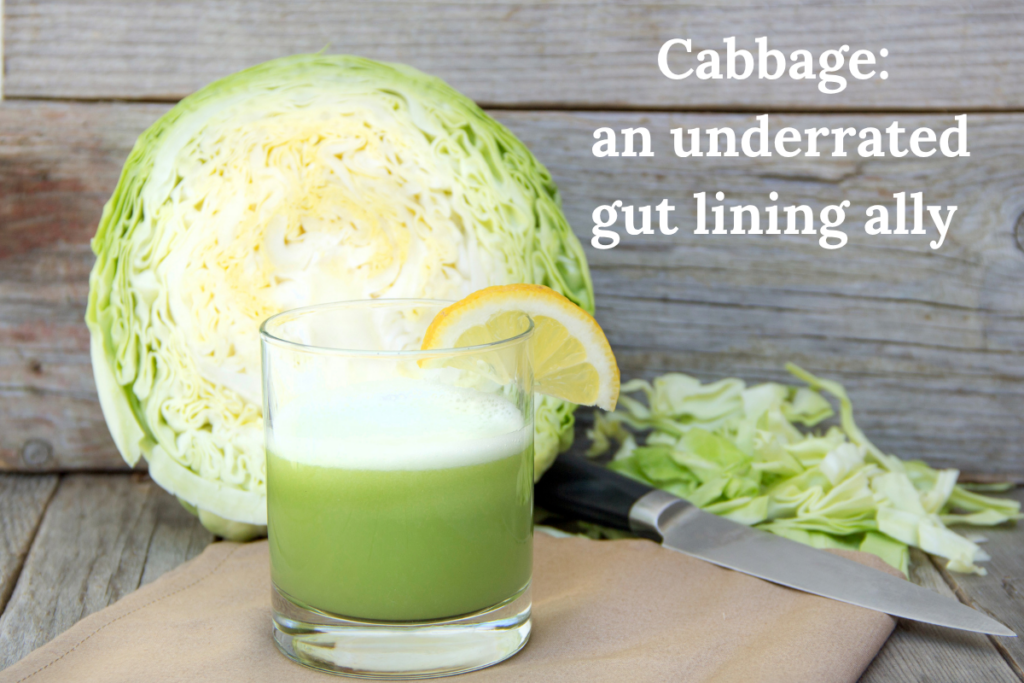
One of the most overlooked tools for gut support might already be sitting in your kitchen: raw cabbage juice.
Cabbage has been used traditionally to help soothe the stomach and support the gut lining for generations. It contains nutrients and plant compounds that may help calm irritation and support the protective lining of the digestive tract.
Think of the gut lining like the protective walls of your digestive system. When those walls become irritated or stressed, digestion may not feel as smooth or comfortable. Certain nutrients in cabbage may help support that protective barrier and create a better environment for beneficial gut bacteria.
For people dealing with bloating, digestive discomfort, or general gut irritation, a small amount of fresh cabbage juice daily has traditionally been used as a gentle digestive support. Even about a quarter cup before meals is commonly used.
It is not fancy. It is not expensive. And it definitely is not trendy. But sometimes the simplest wellness tools are the ones that have quietly stood the test of time.
As with any food based approach, cabbage juice works best as part of a consistently supportive lifestyle rather than as a standalone fix. If you are managing a health condition or taking medications, check with a qualified practitioner before adding it in.
WHERE TO START
5 Practical Steps
Looking for Personalized Support?
At Gut Guidance, the focus is not simply on chasing symptoms. The goal is to help you better understand the patterns that may be influencing how you feel.
As a Board Certified in Holistic Nutrition® practitioner, National Board Certified Health & Wellness Coach, and Clinical Herbalist, Karen helps clients explore the connections between digestion, energy, mood, stress resilience, inflammation, food sensitivities, and genetics.
Support options include:
Wellness Data Consultation
A focused session designed to help you better understand functional testing results, identify key patterns, and gain clarity on potential next steps.
Thrive in Your G.E.N.E.S.: A Gene-Aligned Wellness + Food Sensitivity Reset
A 12-week personalized program that combines food sensitivity testing, genetics insights, nutrition support, and coaching to help you implement sustainable changes with confidence.
1:1 Health & Wellness Coaching
Personalized support to help you turn information into action, build habits that fit your life, and navigate your wellness journey with greater clarity and confidence.
Rather than applying generic wellness advice, the goal is to help you understand what may be most relevant to your unique biology, lifestyle, and goals. Because sustainable wellness often starts with understanding the body more clearly and learning how to work with it, not against it.
NEXT STEP
If you’re wondering which approach may be the best fit for you, start by booking a Wellness Blueprint Call. Together, we’ll explore your goals, current challenges, and whether one of these support options aligns with what you’re looking for.
Ready to explore your next steps? Click the link below to schedule your Wellness Blueprint Call.
Want more like this?
Join the newsletter for exclusive wellness resources and be the first to know when a new blog post goes live.
Sign up below.